
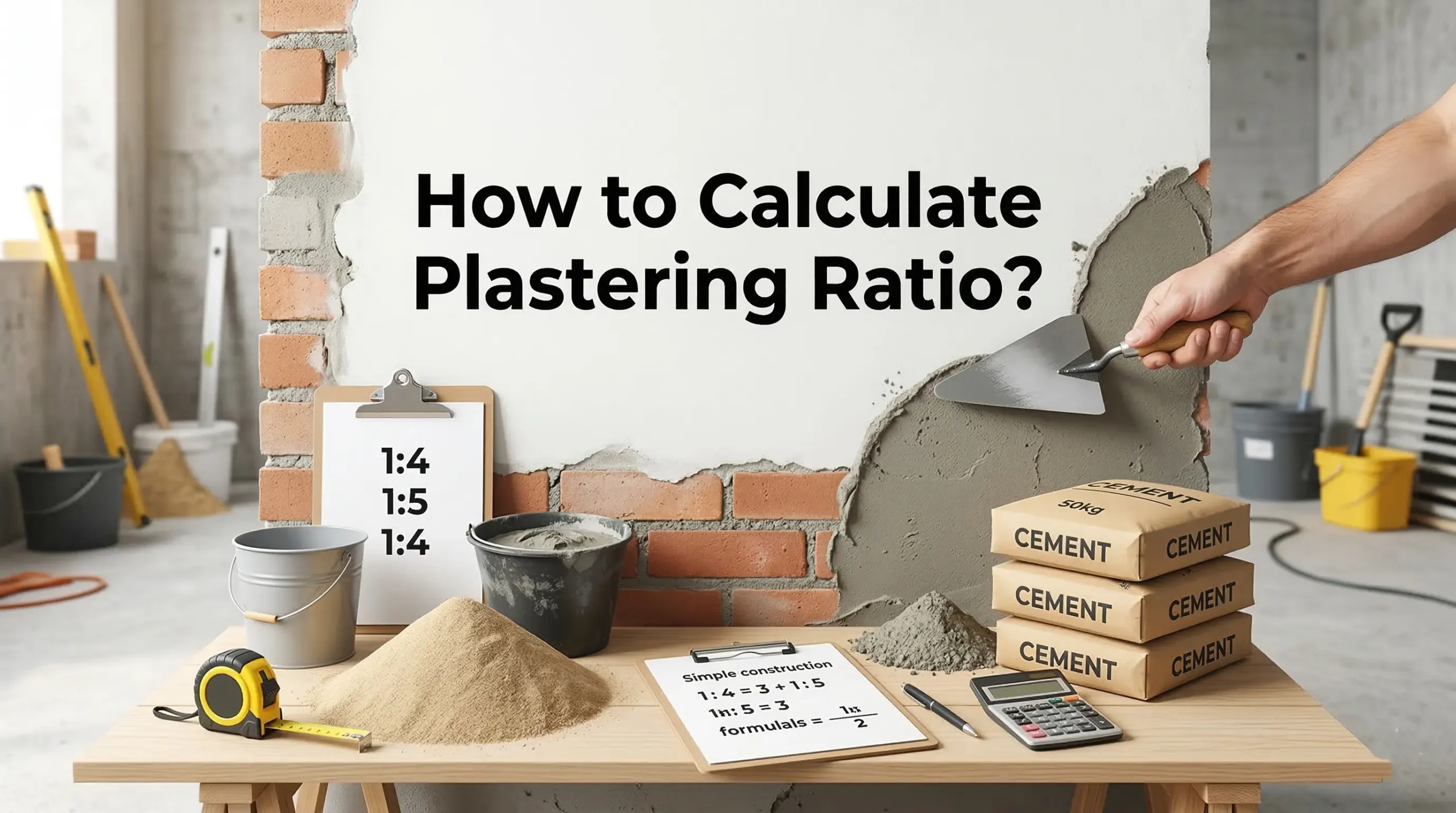
How to Calculate Plastering Ratio? Perfect Ratio Explained with Examples
We need to see our walls smooth, clean, and durable finish, but to look like this plastering is a crucial step. But have you ever wondered what goes into creating that perfect plaster mix? Knowing the right plastering ratio can make a world of difference in the strength, durability, and finish of your walls both inside and out. Whether you’re a homeowner planning construction or a student learning the basics, this guide will help you understand how to calculate the perfect plastering ratio.
What Is Plastering?
Plastering is the process of applying a protective and decorative coat of mortar on brick or concrete walls. It creates a smooth surface ideal for painting and prevents moisture from entering the walls.
Why Is the Plastering Ratio Important?
The plastering ratio determines the strength, workability, and durability of the plaster. If the ratio isn’t correct, the plaster may crack, peel off, or fail to protect the wall. Choosing the right plastering ratio for outer wall and internal walls ensures long-lasting protection and a great finish.
What Is the Plastering Ratio Formula?
The plastering ratio formula is simple:
Plastering Ratio = Cement : Sand
For example, a 1:4 ratio means 1 part cement and 4 parts sand.
You can calculate the quantity needed based on the surface area to be plastered, the thickness of the plaster, and the selected mix ratio.
Common Plastering Ratios Used in Construction
Here are the standard plastering ratios used for various surfaces:
For Internal Walls (Smooth Finish):
- 1:6 → 1 part cement : 6 parts sand
- Suitable for brickwork and internal cement plastering
For Outer Walls (Weather Protection):
- 1:4 → 1 part cement : 4 parts sand
- Stronger and more weather-resistant
- Best plastering ratio for outer wall
For Ceiling Plastering:
- 1:4 or 1:3
- Needs to be stronger and less prone to cracks
For Fine Finish (Final Coat/POP Work):
- 1:3 or 1:2 (Cement : Sand or POP mix)
- For a smooth decorative layer on top of base coat
How to Calculate Plastering Quantity Step-by-Step
Let’s go through a quick example to see how to calculate plaster for a wall.
Example:
Wall Size: 10 feet x 10 feet
Plaster Thickness: 12 mm = 0.012 m
Plaster Ratio: 1:6 (Cement : Sand)
Total Surface Area: 10 ft x 10 ft = 100 sq. ft = 9.29 sq. m
Step 1: Calculate Volume of Plaster
Volume=Area×Thickness=9.29×0.012=0.1115 cubic metersVolume = Area \times Thickness = 9.29 \times 0.012 = 0.1115 \text{ cubic meters}Volume=Area×Thickness=9.29×0.012=0.1115 cubic meters
Step 2: Add 30% Extra for Wastage & Bulking
VolumewithWastage=0.1115+30%=0.145 cubic metersVolume with Wastage = 0.1115 + 30\% = 0.145 \text{ cubic meters}VolumewithWastage=0.1115+30%=0.145 cubic meters
Step 3: Apply Plastering Ratio Formula
Total ratio = 1 (cement) + 6 (sand) = 7 parts
- Cement = (1/7) × 0.145 = 0.0207 m³ = approx 29.9 kg (about 0.6 bags)
- Sand = (6/7) × 0.145 = 0.124 m³
Result: You need 0.6 bags of cement and 0.124 m³ of sand for a 10×10 ft wall with 12 mm plastering using 1:6 ratio.
Tips for Choosing the Perfect Plastering Ratio
- For outer walls, always use 1:4 for better durability and weather resistance.
- For internal walls, 1:6 is cost-effective and works well for normal conditions.
- Ensure clean, well-graded sand for better adhesion.
- Use measuring boxes or buckets for accurate cement and sand quantities.
- Mix plaster in small batches to avoid setting before application.
Tools You’ll Need
- Measuring box
- Weighing scale or standard bag weight
- Water bucket
- Trowel and mortar pan
- Spirit level and straight edge
Which Facing House is Good for Plaster Longevity?
While this topic might seem unrelated, house orientation (facing) plays a subtle role in wall longevity. For example:
- East-facing houses receive mild morning sun, causing less heat stress on outer walls.
- North-facing houses are cooler and receive less direct sunlight—ideal for plaster durability.
- West-facing houses face harsh afternoon heat; proper outer wall plastering (1:4 ratio) is crucial here.
- South-facing houses get intense sunlight for long hours. Use high-performance plaster mixes to prevent damage.
So, if you’re planning construction and wondering which facing house is good, a north or east-facing home is generally better for plaster health and cooling.
Conclusion
Understanding how to calculate plastering ratio is essential for achieving long-lasting, crack-free walls. Whether you’re plastering a ceiling, interior room, or external wall, the correct mix makes all the difference. Use the plastering ratio formula based on your needs, and always choose a stronger mix like 1:4 for outer walls exposed to weather.
And if you’re also deciding which facing house is good, remember that orientation affects not just comfort and energy efficiency but also the lifespan of your plastered surfaces.
Quick Recap:
- Use 1:6 for internal walls
- Use 1:4 for outer walls
- Calculate quantity based on area, thickness, and ratio
- Choose house facing wisely for long-term wall health
Now you’re ready to mix it right and plaster like a pro!


Make An Enquiry1
customers says
KMG is a great builder to work with. Biggest advantages that I got by selecting KMG villa project : – Affordable – In time completion. Hats off for keeping the promise on timelines. All the best to the Team for future endeavors.

Ali Mubarack
Business
Thank you,Pleasantly surprised and extremely pleased…that is how we would describe our building experience with KMG. From start to finish, everyone was very professional and helpful.

Madhavan Nair
Ex Army Engineer
We recommend KMG developer as perfect home makers and we have decided to go for a KMG Villa too in another couple of years. Wish you the best for for all upcoming projects.
